


A Then & Now photo tour of the always exciting and ever-changing Augusta National Golf Club
Bobby Jones set out, with his beloved Old Course as inspiration, to create the ideal golf course at Augusta. His collaborative partnership included Dr. Alister MacKenzie, Clifford Roberts, Marion Hollins and others—a meeting of the minds with a singular focus. In spite of the early challenges associated with stabilizing the club, the group certainly achieved the objective of designing and building a golf course worthy of acclaim. Dr. MacKenzie gave his assessment of their creation in an essay that was included in the program for the First Annual Invitation Tournament held in March of 1934:
“If, as I firmly believe, the Augusta National becomes the World’s Wonder Inland Golf Course, this will be due to the original ideas that were contributed by Bob Jones.
What is the “ideal” course? Bob and I found ourselves in complete accord on these essentials:
- A really great course must be pleasurable to the greatest possible number.
- It must require strategy as well as skill, otherwise it cannot be enduringly interesting.
- It must give the average player a fair chance and at the same time require the utmost from the expert who tries for sub-par scores.
- All natural beauty should be preserved, natural hazards should be utilized, and a minimum of artificiality introduced.
I want to say quite frankly that if our finished work is favorably received, it will be in part due to the excellent material at our disposal. We had plenty of land, towering pine trees, beautiful shrubbery, streams of water, a mildly rolling terrain of great variety, a rich soil for growing good fairway grass and a naturally beautiful setting from an architectural standpoint.
The property was originally settled by a Belgian Baron by the name of Berckmans. He was an ardent horticulturist and in this property he indulged his hobby to the limit of his resources. I don’t suppose the old Baron suspected that golf would someday become a popular sport in America and his property used by the world’s greatest player for a golf course. But if Bob’s great grandfather had foretold to the Baron what was to occur, the Baron could not possibly, in my opinion, have devised a beautification program that would today better serve our purposes.
There are azaleas in abundance and a great variety of small plants, shrubbery and hedges, and a real cork tree. There are also scores of camellia bushes, that are now really trees—in size. But the most impressive of all is the ancient double row of Magnolia trees (said to be the finest in the South) that will border the driveway entrance into this ‘Golfer’s Paradise’.
Now to get back to our golf course. Doubt may be expressed as to the possibility of making a course pleasurable to everyone, but it may be pointed out that the “Old Course” at St. Andrews, Scotland, which Bob likes best of all, very nearly approaches this ideal.
It has been suggested that it was our intention at Augusta to produce copies of the most famous golf holes. Any attempt of this kind could only result in failure. It may be possible to reproduce a famous picture, but the charm of a golf hole may be dependent on a background of sand dunes, trees, or even mountains several miles away. A copy without the surroundings might create an unnatural appearance and cause a feeling of irritation, instead of charm. On the other hand, it is well to have a mental picture of the world’s outstanding holes and to use this knowledge in reproducing their finest golfing features, and perhaps even improving on them.
At Augusta we tried to produce eighteen ideal holes, not copies of classical holes but embodying their best features, with other features suggested by the nature of the terrain. We hope for accomplishments of such unique character that the holes will be looked upon as classics in themselves.
The acid test of a golf course is its abiding popularity. And here we are up against a real difficulty. Does the average golfer know what he really likes himself? When he plays well, he praises the course, but if his score is a high one the vigor of his language would put to shame a regimental sergeant major. It is usually the best holes that are condemned most vehemently by those who fail to solve their strategy. Bob Jones realizes this so strongly that when his opinion about the design of Augusta National, he said that the course would differ so markedly from others, that many of the members at first would have unpleasant things to say about the architects. A few years ago I would have agreed with Bob, but today, owing to his own teaching, the work and writings of C.B. Macdonald, Max Behr, Robert Hunter, and others, Americans appreciate real strategic golf to a greater extent than even in Scotland, the Home of Golf.
I do not believe the Augusta National will impress anyone as a long course, as although undulating it is not hilly. There are no irritating walks from greens to tees and moreover it will be so interesting and free from annoyance of searching for lost balls, that players will get the impression that it is shorter than it really is.”
The ink was barely dry on MacKenzie’s writing when changes began to be made. The course evolved, as every course does, but very few have undergone the continuous tinkering that Augusta has since that inaugural tournament that would come to be known simply as The Masters. Perry Maxwell, Robert Trent Jones, George Cobb, Jack Nicklaus and Tom Fazio have all left their marks.

Debate rages among lovers of the course and the tournament about whether the evolutionary arc of Augusta National has moved it closer to or further away from the ideal standard envisioned by its founder. Regardless of where one stands on that question, we can all agree that the roars on the back nine on those magical Sunday afternoons in April are tough to beat.
The Course Then & Now
For the second time in its history, The Masters tournament was not contested during its normal slot on the spring calendar. Thankfully, our fellow geeks took to social media to bring us a spirit-lifting look at Augusta National during these troubled times. The tour that follows is a modern collaborative effort featuring historical photos and commentary from Simon Haines (@Hainesy76) and Brian Schneider (@BSchneider126), as well as the Good Doctor himself. For recent contrast, Jon Cavalier (@LinksGems) has provided his photos and thoughts. The evolution of the course is evident, and we leave it to each geek to decide which era they love most.

In spite of our familiarity with the course from years of watching the tournament on television, those who have had the good fortune to attend as patrons are unanimous in the opinion that no video or photo can convey the feeling of being there. Obviously. Do take note, however, of the scale and movement of the land that is conveyed in Jon’s photos, taken during a recent practice round. Thinner crowds coupled with his interesting vantage points made for compelling images. Enjoy the tour!
Click on any gallery image to enlarge
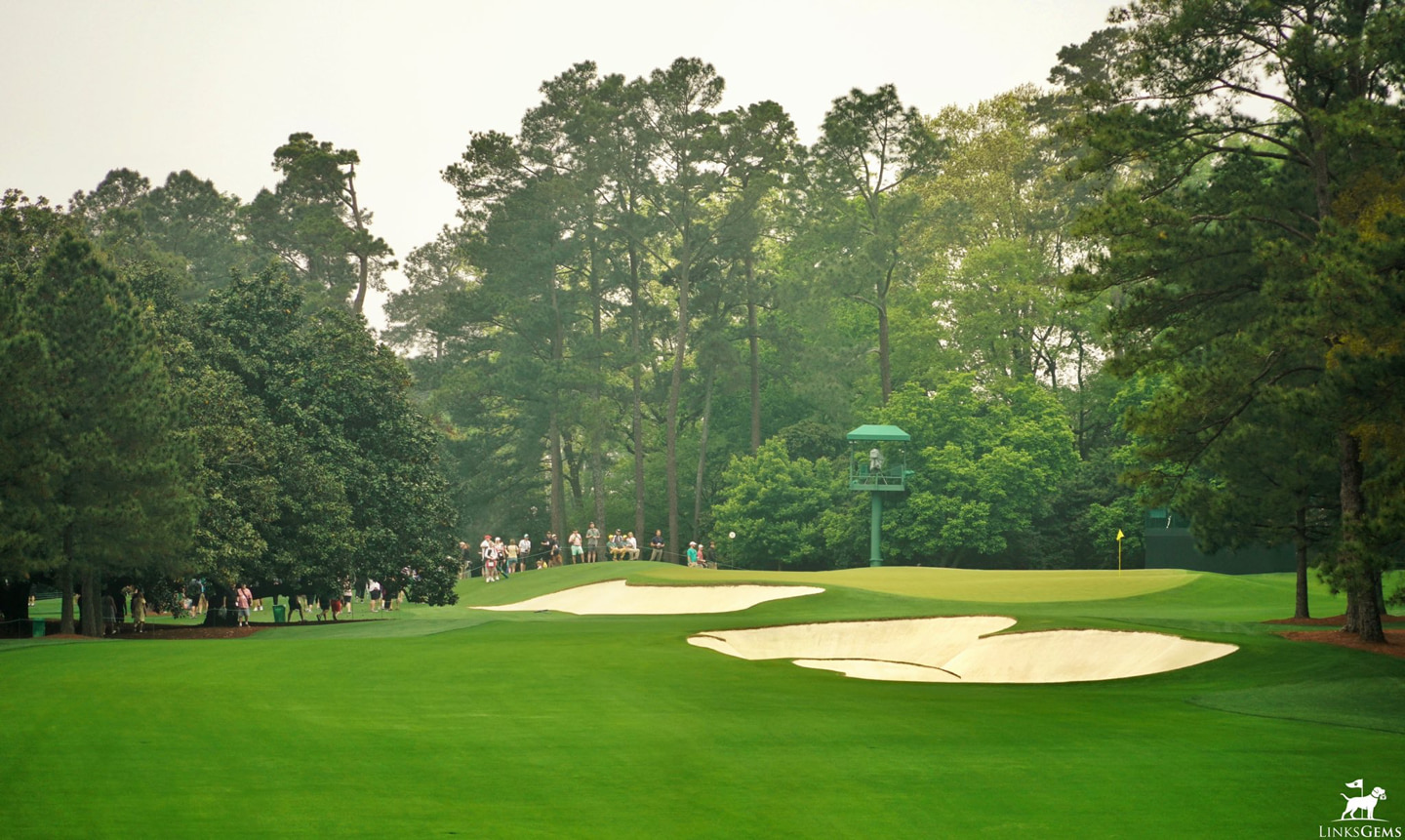
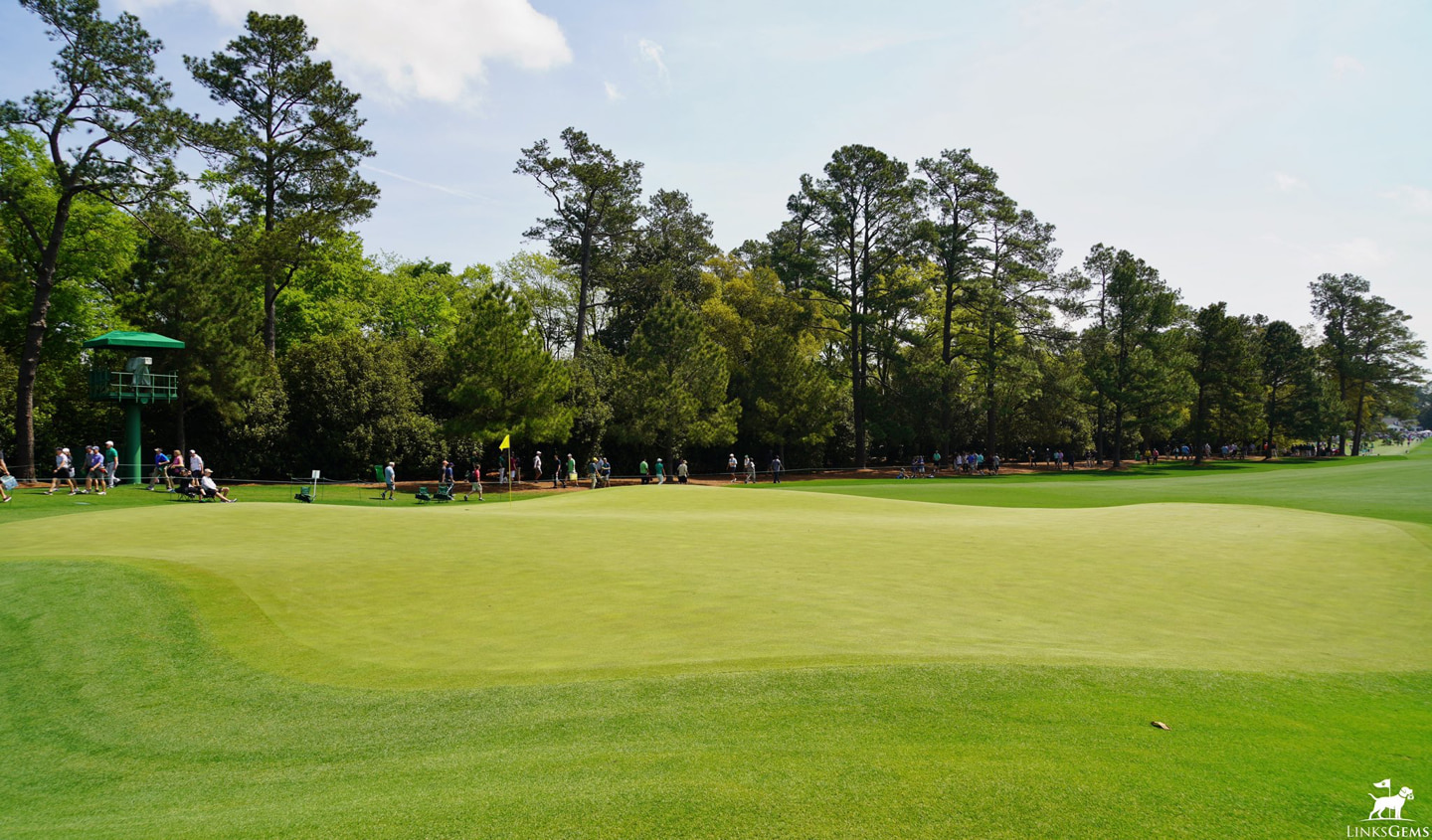
HOLE #1 “Tea Olive” – 445 yards – par 4


“A drive that is long and straight, skirting a group of trees on the right will be in a favorable position for the second. It is difficult to obtain par figures from any other position.” – Dr. MacKenzie


A wide fairway welcomes the nervy opening tee shot at the Masters, but the dogleg right demands precision, and the green undulates like the ocean in a gale. There isn’t a player in the field who wouldn’t take 4-4-4-4 here.


HOLE #2 “Pink Dogwood” – 575 yards – par 5

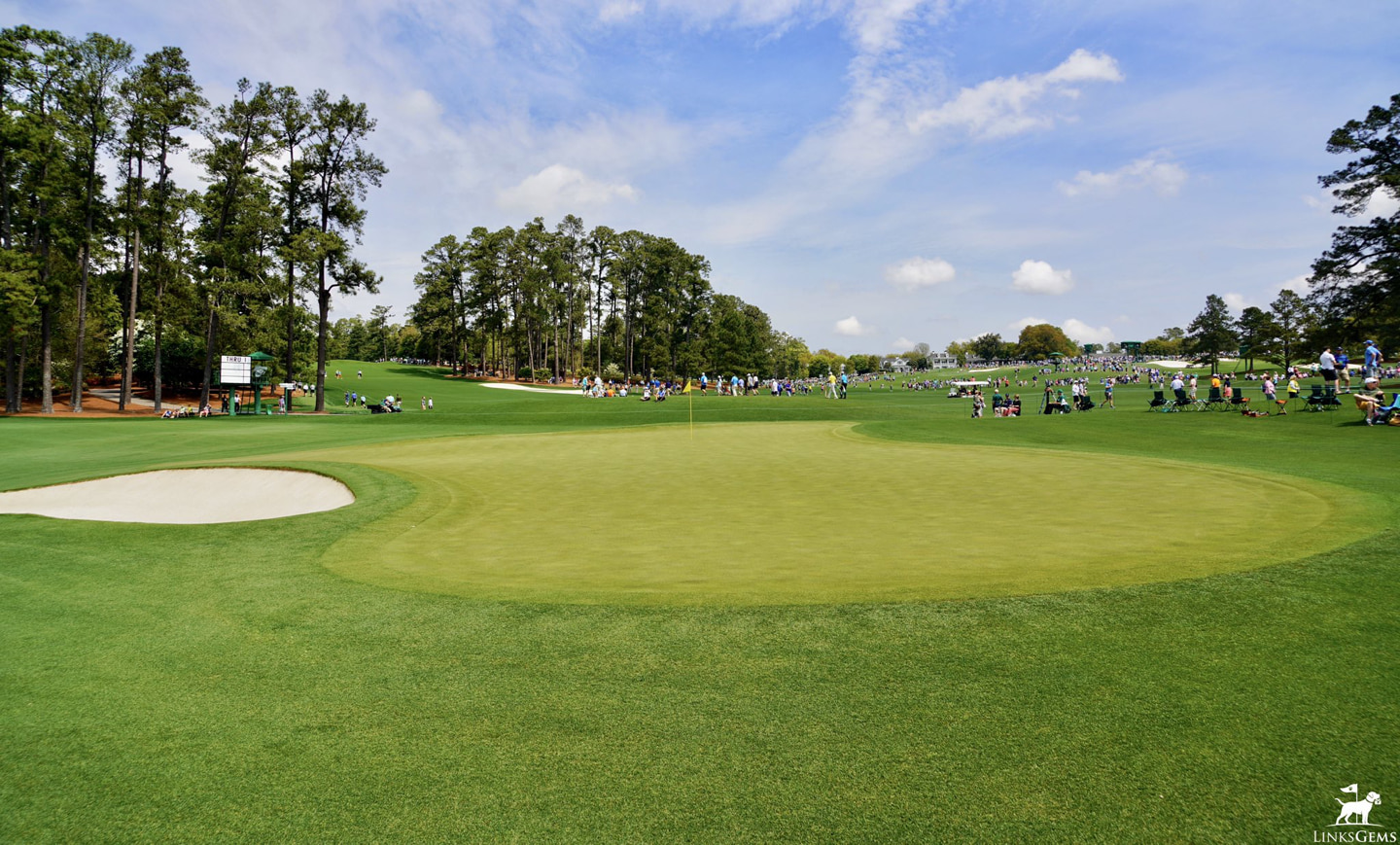
“This is an interesting three shot hole down hill. Each shot will have to be placed with great accuracy if par figures are obtained. On the other hand, it is quite possible for a powerful and accurate player to reach the green in two shots.” – Dr. MacKenzie
The green on the par-5 second is perhaps the only one on the course that might be MORE interesting today than it was in 1934. In its early days, there was just one greenside bunker. The left-hand bunker would be added in the 1940s, followed by the back-left expansion of the green a number of years later.

A blind tee shot to a fairway sweeping left and hard downhill leaves an approach from a downhill lie to green sloping hard left-to-right. The first birdie opportunity and generally one of the easiest holes on the course.



HOLE #3 “Flowering Peach” – 350 yards – par 4


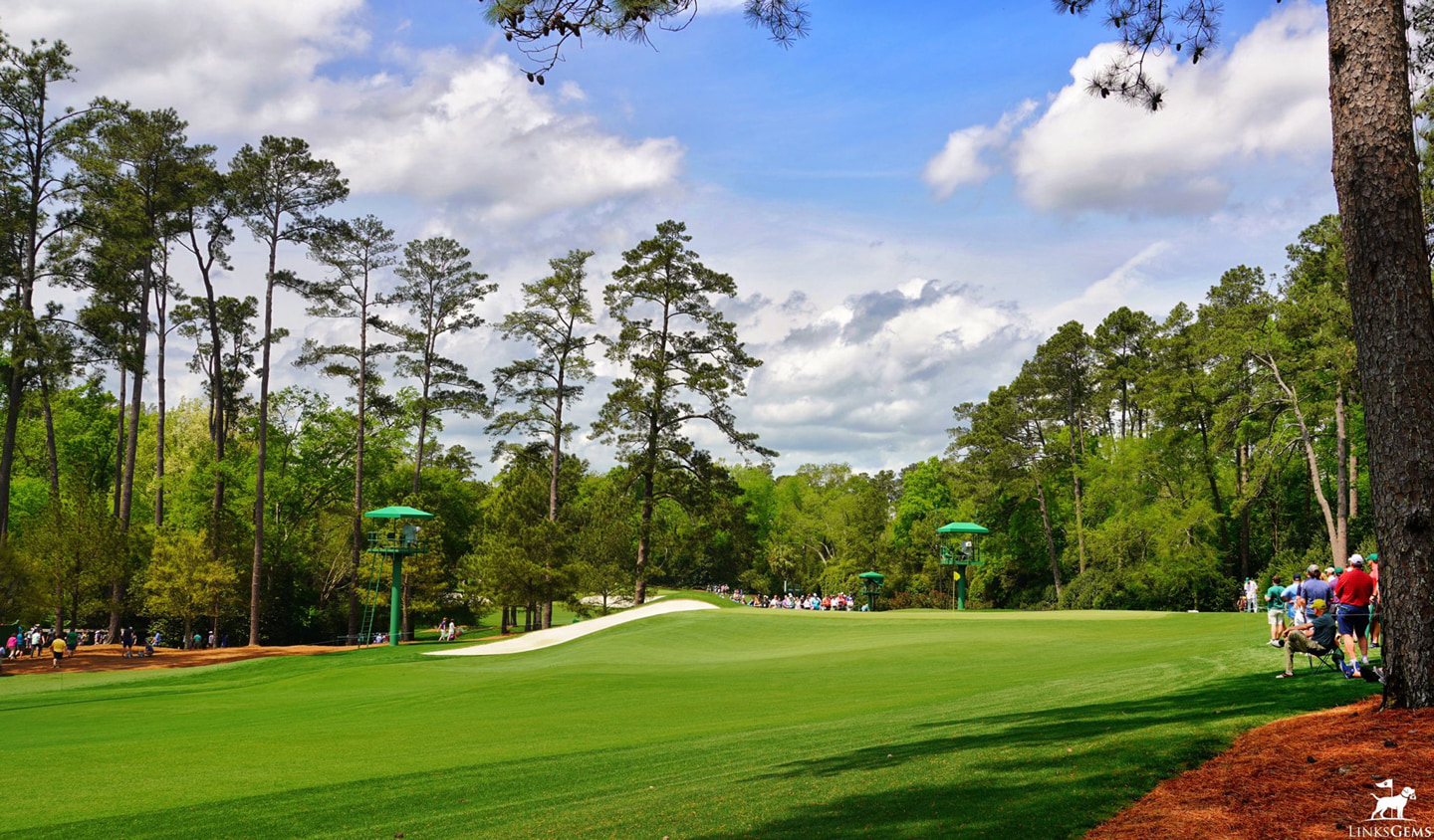
“This green is situated on an interesting natural plateau. The left hand side of the green is very narrow; whereas the right side is broad. It is easy for anyone to reach the wide portion of the green with their second shot, but difficult to reach the narrow end where the pine will usually be placed.” – Dr. MacKenzie


No. 3 has seen its share of trainwrecks as players attempt to drive the ball on to this extremely shallow, severely sloped green. Laying up can leave an awkward half-wedge and bring the enormous fairway bunkers into play.

HOLE #4 “Flowering Crabapple” – 240 yards – par 3


“This is a very similar hole to the famous Eleventh (Eden) at St. Andrews. There have been scores of attempted copies of this famous hole but there is none that has the charm and thrills of the original. Most copies are failures because of the absence of the subtle and severe slopes which create the excitement of the original hole, and also because the turf is usually so soft that any kind of a sloppy pitch will stop. Previous failures, followed by, comparatively speaking, increasing successes may have given us sufficient experience to warrant us in hoping that here at last we may have constructed a hole that will compare favorably with the original.” – Dr. MacKenzie
The original 13th and 14th Holes at Augusta National (now the 4th and 5th) were both modeled after great holes from The Old Course, as was the spirit of the course itself. The par-3 13th was a loose replica of the famed Eden 11th and the 14th, a version of the infamous Road Hole 17th.


The first par-3 of the round is a monster considered by some to be the toughest par on the course. The guarded green is sloped right-to-left and back-to-front. No problem if you’ve got a 240yd high cut in your bag.


HOLE #5 “Magnolia” – 495 yards – par 4

“This will be a similar type of hole to the famous 17th at St Andrews. A group of trees will form the corner of the dogleg instead of the station masters garden and the green itself will be situated on a similar plateau to its prototype.” – Dr. MacKenzie


Lengthened by 40 yards before last year’s tournament, this hole now demands a 300 yard carry to clear the enormous fairway bunkers inside the dogleg. The green is eye-poppingly sloped in front, making three-putts common here.


HOLE #6 “Juniper” – 188 yards – par 3


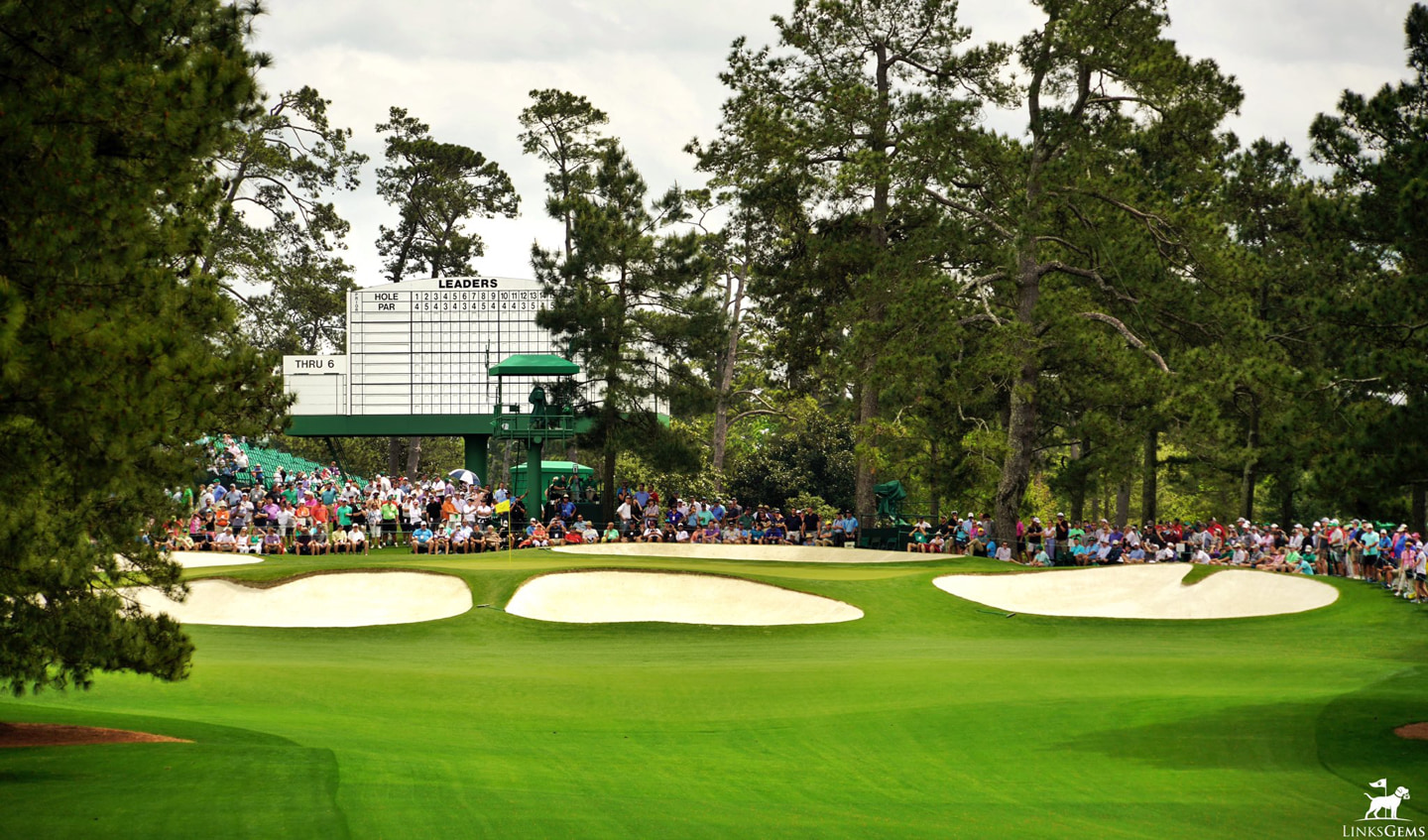
“This will be similar to the Redan at North Berwick but here owing to its extreme visibility, lie of the land and beauty of the surroundings, we have no doubt that we will be able to construct a much more attractive hole than the original.” – Dr. MacKenzie


A personal favorite and a terrific par-3, Juniper plays downhill over hillside spectators to an incredible green protected by a huge bunker. Seeing the back right pin position in person for the first time is a true revelation.


HOLE #7 “Pampas” – 450 yards – par 4


“This hole is similar in character to the Eighteenth Hole at St. Andrews, Scotland. There is a deep hollow at the front of the green which it is necessary to attack at the correct angle for par figures to be obtained. At this hole it will also be desirable to play a run-up shot as it will be exceedingly difficult to retain a pitch in the usual position of the flag.” – Dr. MacKenzie

Substantial changes have turned one of the easier holes on the course into one of the toughest, as one of the narrowest fairways on the course leads to one of the shallowest greens, which must often approached from a downhill lie.



HOLE #8 “Yellow Jasmine” – 570 yards – par 5

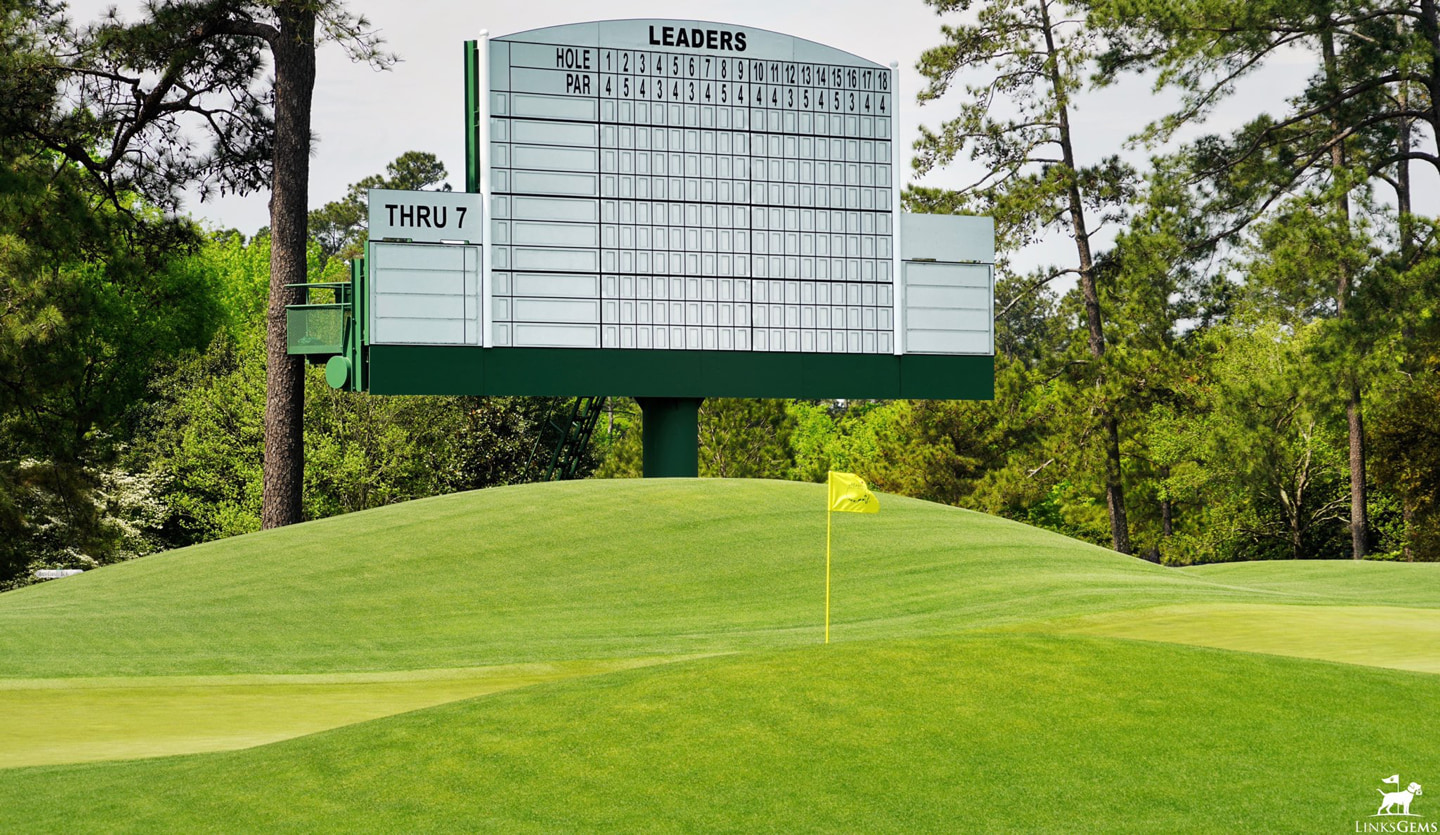
“This is a three shot hole uphill. The green is in a punchbowl surrounded by large hillocks nine to twelve feet high. It is completely visible for the third shot and a player who is sufficiently long to get up in two will be able to define the position of the green owing to the size of the surrounding hillock. It may be compared to the Seventeenth Green at Muirfield (Edinburg, Scotland).” – Dr. MacKenzie
Clifford Roberts was a fan of the 8th green but was bothered by the way the surrounding mounds inhibited spectator viewing. In the late 1950s, he had them removed while retaining the putting surface itself… sort of. Jones hated the change so the green was quickly rebuilt, with flanking bunkers replacing the lost mounds. With the help of Byron Nelson, the mounding would be restored in the late 1970s, giving us the 8th green complex we know today.


The second of four exceptional three-shotters, the 8th plays uphill and blind into an elongated green bowled in by enormous mounds (restored by Byron Nelson in 1979). Any miss left is stone dead. A great risk/reward hole.


HOLE #9 “Carolina Cherry” – 460 yards – par 4


“This is a hole of the Cape type played slightly downhill. A long straight drive to the right will give an easy second to the green.” – Dr. MacKenzie
Players quickly figured out that the best line into the 9th was often from the 1st fairway… reminiscent of various holes at St Andrews. To force players to approach the hole “properly”, Roberts had Perry Maxwell rebuild the green (twice) and add bunkers in the face of the hill.
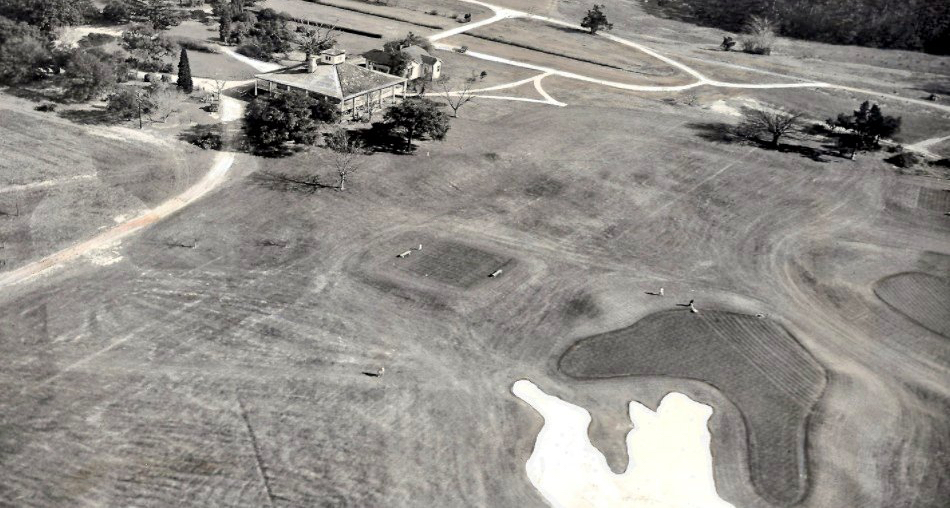


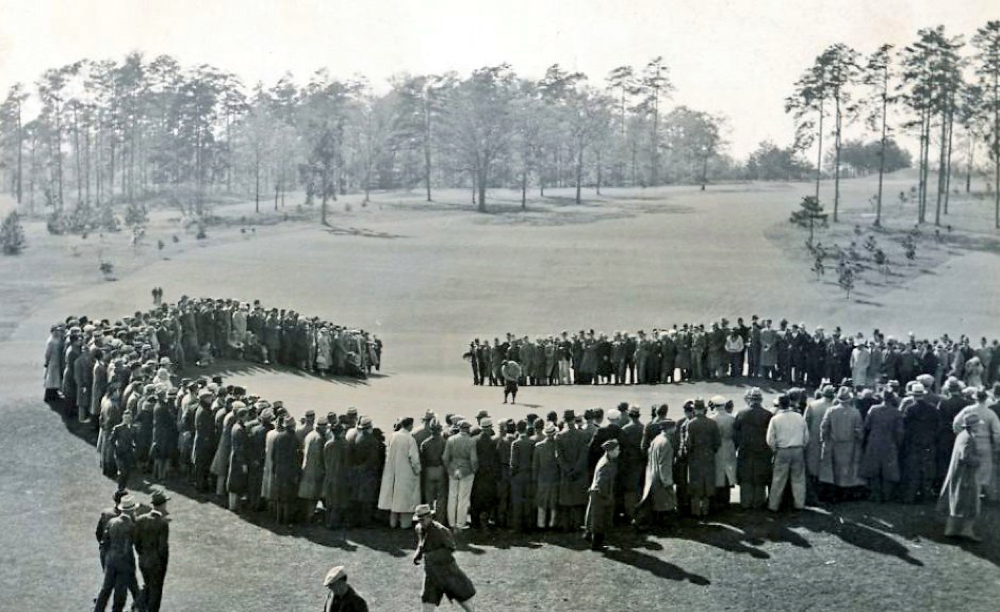

The tee shot here is to a blind landing area, but Carolina Cherry is all about the approach, which is steeply uphill from a downhill lie, and the green, which slopes sharply from back-to-front. The back-nine awaits.


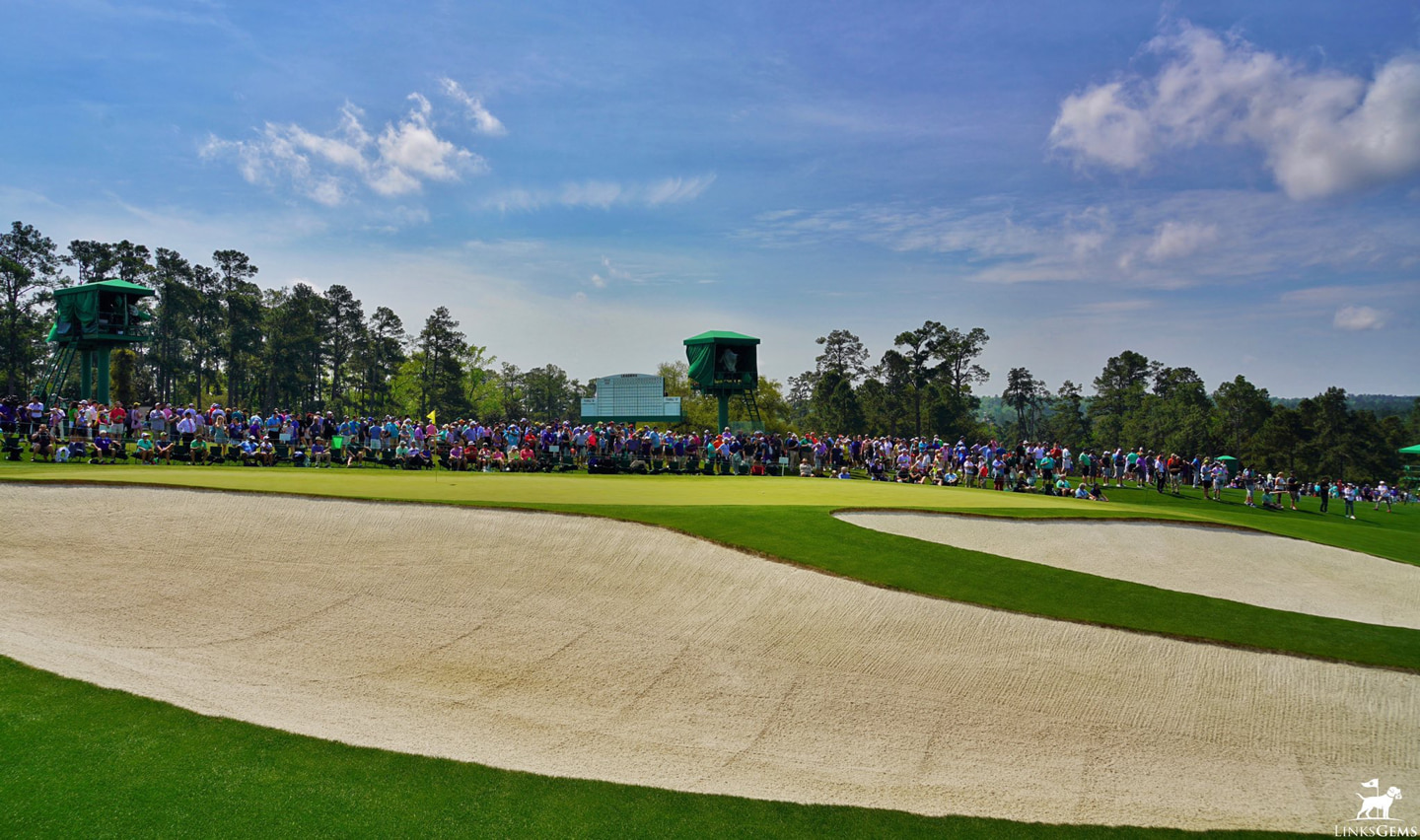

HOLE #10 “Camelia” – 495 yards – par 4


“This is a comparatively easy down-hill hole. A long drive over hillocks on the right will land on a plateau from which an iron shot can be played to the opening of a large nature-made punch bowl green. The driver that pulls his shot to the left of the fairway is called upon to play a difficult second shot over a large spectacular bunker, with small chance of getting near the pin. This hole embodies the most attractive features of the Thirteenth hole at Cypress Point, California, and the Fourth at Alwoodly, one of the best of the British inland links.” – Dr. MacKenzie
Today’s 10th Hole is obviously VERY different than what’s shown here as the 1st Hole. Jones and Roberts hired Perry Maxwell to relocate the green to its current location in the summer of 1937. Moving the green back 60 yards turned Mackenzie’s sprawling greenside bunker into the beautiful but oddly-situated fairway bunker that we find today.
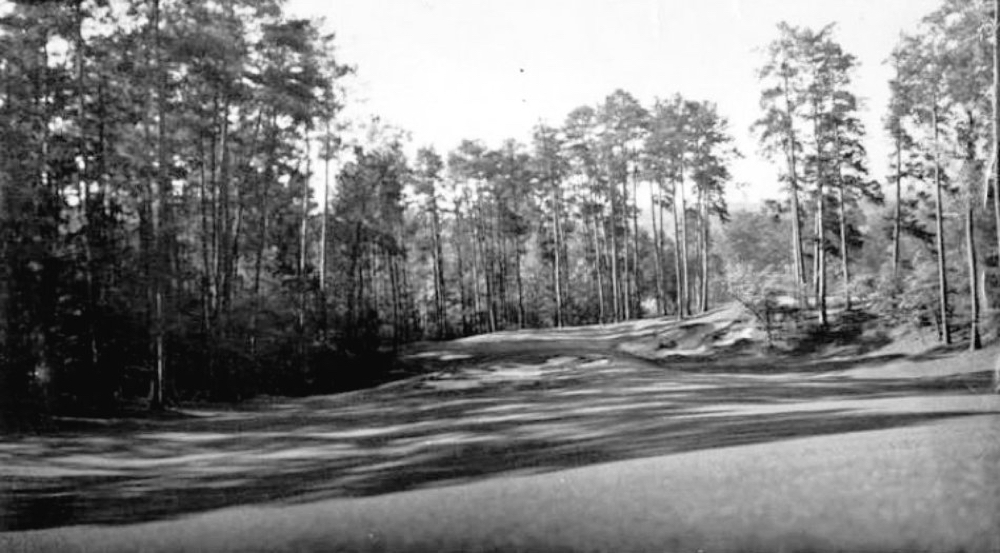
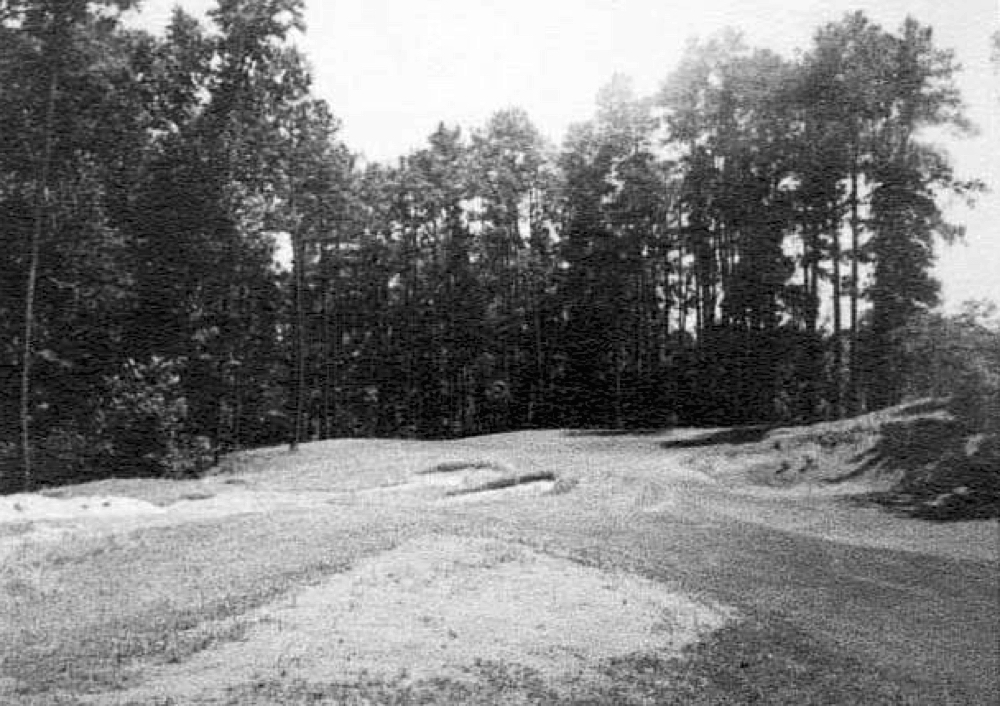

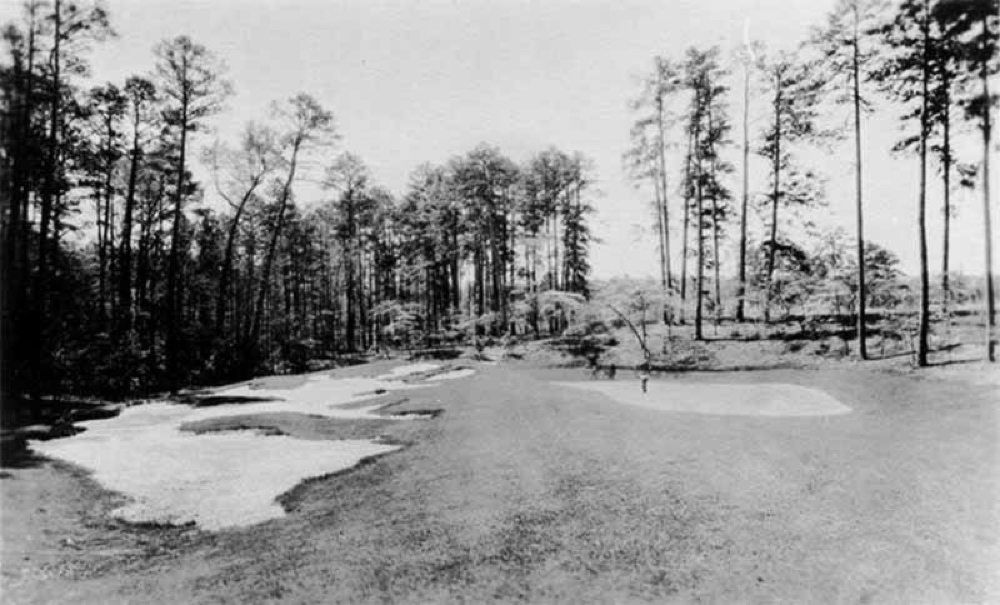


And so it begins – the most exciting back nine in major championship golf. As a first timer, I was mesmerized at the remarkable length and steepness of the downhill 10th. Historically, this is the toughest hole on the course.


HOLE #11 “White Dogwood” – 5050 yards – par 4

“The green is situated in the bend of a stream. The approach has a marked tilt upwards from left to right, so that the further and more accurately a drive is placed to the left the easier the second shot becomes. This should always be a quite fascinating hole. I don’t know another quite like it.” – Dr. MacKenzie
The fairly sharp dogleg of MacKenzie’s original 11th has been straightened and lengthened considerably over the years. Extensive tree planting has also turned a wonderfully strategic tee shot into one of the tightest and toughest on the course. The 11th green has been rebuilt and raised numerous times, and the current pond was once a little bend in Rae’s creek that guarded the front-left of the green.


White Dogwood begins with one of the day’s toughest tee shots down through a narrow chute of trees and culminates with an approach into a green guarded by a pond left, big mounds front a slope right and Rae’s Creek long. In the April 21, 1958 issue of Sports Illustrated, Herbert Warren Wind coined the phrase “Amen Corner” to describe the 11th green, 12th hole and 13th tee. The evocative name stuck immediately.


HOLE #12 “Golden Bell” – 155 yards – par 3

“This is an interesting pitch shot to a long narrow green immediately over a stream. The bold player will go for the pin on the right, while the less ambitious will steer for the larger landing space on the left side of the green. There is a steep sandy bank covered with beautiful trees beyond the green.” – Dr. MacKenzie
The par-3 12th is a very simple hole (though certainly not easy), which has likely helped it retain its original character as much as any hole at Augusta, but it’s almost hard to imagine that it once played as the 3rd considering the massive role it plays in the event each year.


Perhaps the most famed par-3 in golf, Golden Bell is just 150-some yards through a mysterious and beguiling wind to an angled, kidney-shaped green across Rae’s Creek. Has any hole produced more major championship drama?


HOLE #13 “Azalea” – 510 yards – par 5


“This is played along the course of a brook with the final shot finishing to a green over the stream with a background of a hill slope covered with pine trees. The hole has some of the best golfing features of the Seventeenth hole at Cypress Point, California, and the ideal hole depicted in C.B. Macdonald’s book.” – Alister Mackenzie
Augusta’s great 13th (former 4th) is the second hole for which MacKenzie cited other holes that influenced its creation. This is the “ideal hole” mentioned, a design he himself created for a competition in Country Life magazine related to Macdonald’s Lido project.


Probably the best par-4-and-a-half in the world, and definitely the prettiest. The club’s acquisition of land from neighboring Augusta Country Club could see this hole lengthened by as much as 60 yards. I wouldn’t change a thing.


HOLE #14 “Chinese Fir” – 440 yards – par 4

“This hole embodies some of the features of the Sixth Hole at St. Andrews, Scotland. A long drive skirting or played over a bunker on the right will give a visible shot to the green. From the left the green is semi-blind and moreover a run up approach will be required over a succession of hillocks and hollows.” – Dr. MacKenzie
The 14th green complex is an absolute marvel, surely among the most interesting that we get to see on TV. If only the pros hit longer clubs into this green rather than short irons—here are few shots more satisfying to watch than a running ball that climbs onto the top shelf.
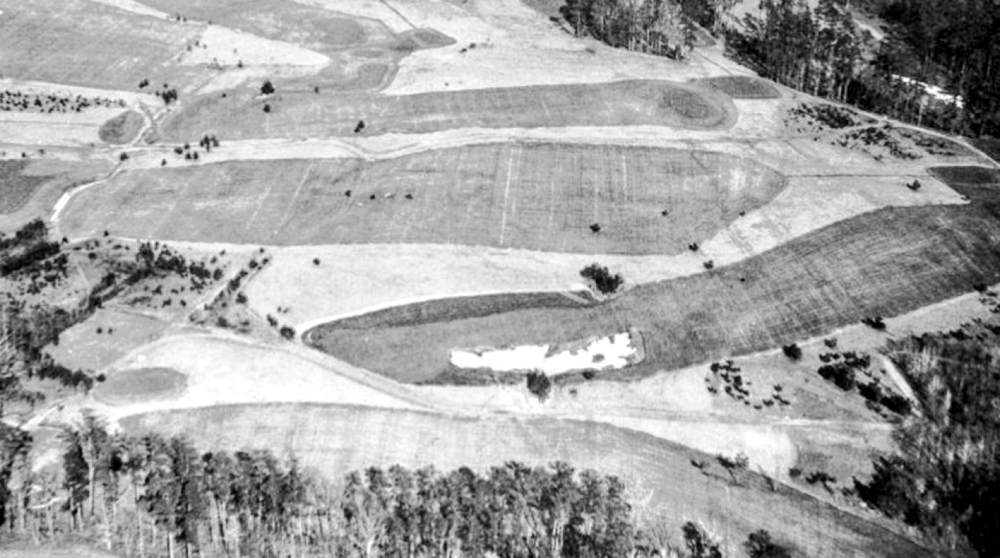


Since 1952, the dogleg-left 14th is the only hole at Augusta National without a single bunker. The defense here is the tricky green, which features a false front, beyond which it runs away to the back and hard left-to-right.

HOLE #15 “Firethorn” – 530 yards – par 5


“This is a three shot hole to most golfers. It is not only an interesting three shot hole, as one will be maneuvering for position from the tee shot onwards, but also a magnificent two shot hole, as a skillful and courageous player will, aided by a large hillock to the right, be able to pull his second around the green. A pond in front of the green provides the penalty for the long player who fails to make a perfect second shot.” – Dr. MacKenzie


The second of two incredible par-4-and-a-half holes on the back side and the site of Gene Sarazen’s Shot Heard Round The World in 1935: a 4-wood for double eagle. A tremendously exciting hole for the patrons and players alike.


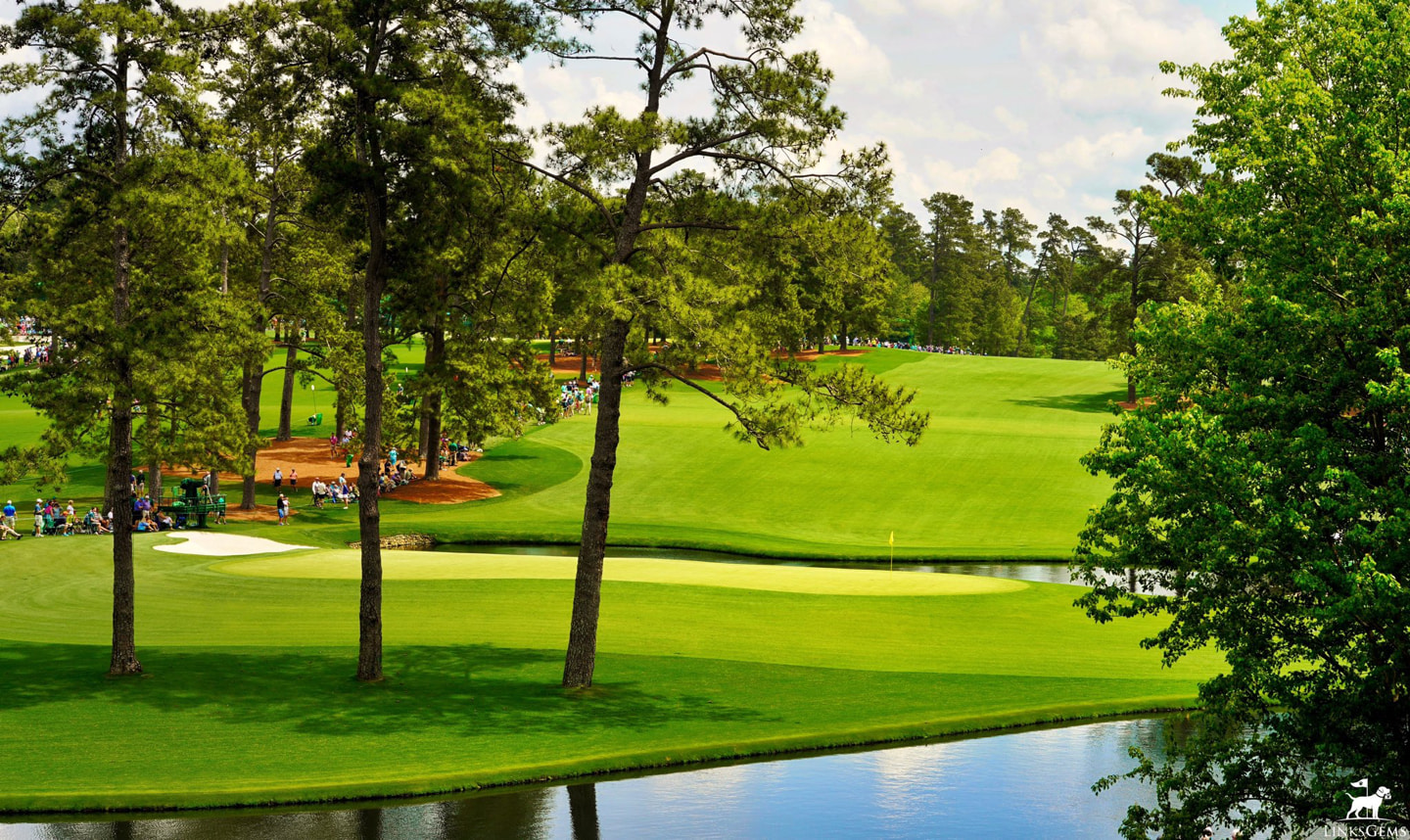
HOLE #16 “Redbud” – 170 yards – par 3

“This is a somewhat similar hole over a stream to the best hole (seventh) at Stoke Poges, England. It is probably a better hole than the one at Stoke Poges as the green is more visible and the background more attractive.” – Dr. MacKenzie
In the late 1940s, Robert Trent Jones dammed up the creek on what’s now the 16th, shifting the tees and flipping the green to the other side of the water. While it would have been fantastic to have played MacKenzie’s original hole, the changes made by Trent Jones in creating the current 16th certainly added variety to the set of one-shotters.

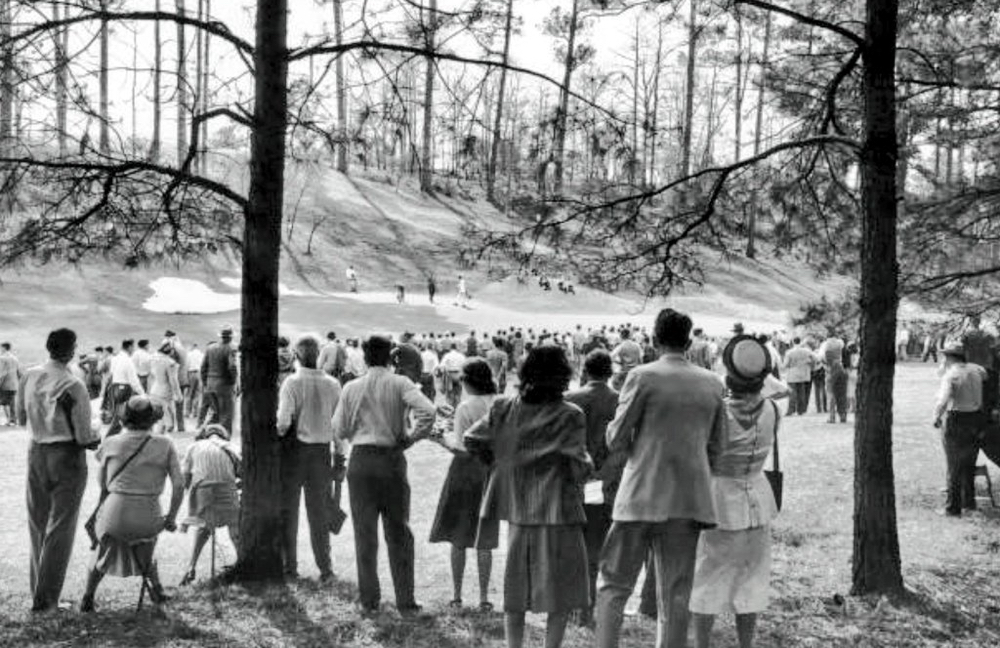


“IN YOUR LIFE have you seen anything like that?” Verne Lundquist’s iconic call of Tiger Woods’ amazing chip-in on Sunday at the 2005 Masters is still the first thing I think of when I see the 16th at ANGC. And it always will be.


HOLE #17 “Nandina” – 440 yards – par 4

“The construction of this green is somewhat similar to the famous Fourteenth at St. Andrews (reversed). It will be necessary to attack the green from the right and it will be essential to play a run-up shot if par figures are desired. We hope to make the turf of such a character that an indifferent pitch will not stop on the green. Until players have learned to play the desired shot this will undoubtedly be one of the most fiercely criticised holes.” – Dr. MacKenzie
This green at Augusta was the opposite of the 14th at St Andrews, with the strong contour on the left rather than the right. Maxwell subsequently added the bunkers to the mound.
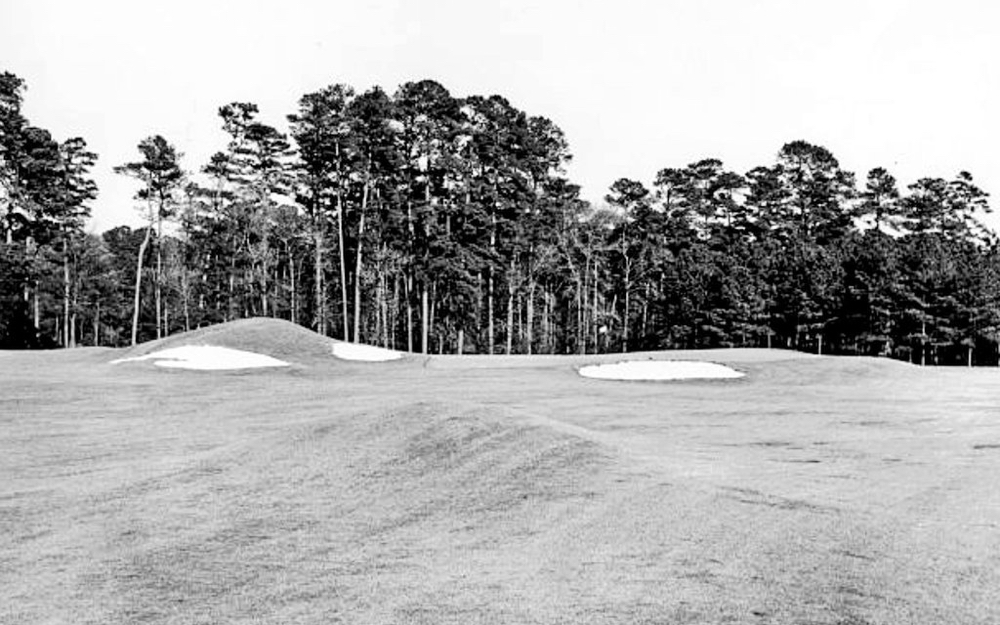


The 17th was best known for the Eisenhower Tree, a giant loblolly pine 210yds from the tee that the 34th President wanted cut down. He belatedly got his wish courtesy of Mother Nature when a 2014 ice storm brought it down.


HOLE #18 “Holly” – 465 yards – par 4

“The tee shot is played over a valley and a bank running diagonally from left to right. The longer the drive to the right the easier the second shot, as the approach to the green is bunkered heavily on the left.” – Dr. MacKenzie
Note the central fairway bunker and how the green extends well down the hill alongside the left greenside bunker. The original green on what’s now the finishing hole was massive compared to today’s version.


The narrow chute demands a straight shot from this pressure-packed tee. The fairway bunkers up the left side are enormous and deep. The green is severe and a short-side is an automatic bogey. Otherwise, an easy finishing hole.


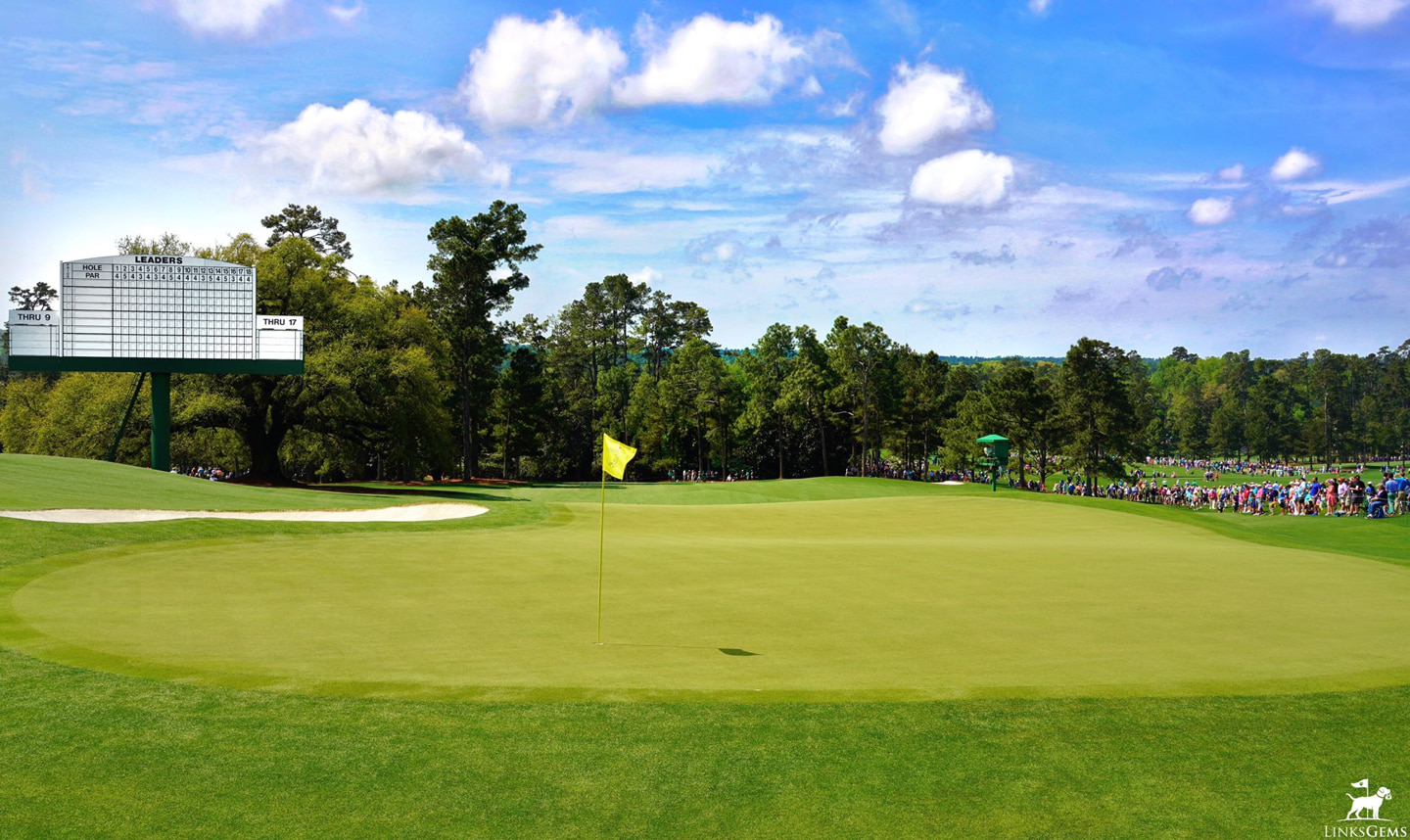
Two things can be counted on with relative certainty: First, the golf course at Augusta National Golf Club will continue to evolve, and second, it will produce exciting championships for golf geeks and casual fans alike every year.
For even more on Augusta National and The Masters, we highly recommend:
- Plans for the Ideal Golf Course on the Alister MacKenzie Archive by Josh Pettit, including colorized historical photos and the original course plan
- The Complete Changes to Augusta National on Golf Digest by Ron Whitten and Chris O’Reilly, illustrating the evolution of each hole
- ANGC – Retro Photo Tour on GolfClubAtlas by Sven Nilsen, providing a treasure trove of maps, aerials, and photos spanning several decades
- The Art Behind Augusta’s Roars on The Fried Egg by Garrett Morrison, examining the role of design in producing the famed Sunday vibe
- A Brief History of Augusta National’s Famous Greens on Golf Digest by Ron Whitten, taking a closer look at the putting surfaces
- The Evolution of the Golf Course at Augusta National on GolfClubAtlas by Daniel Wexler, contemplating what Dr. Mackenzie would think of the course today
- Augusta National Video Playlist on GeekedOnGolf, featuring videos from the club, Geoff Shackelford and others
- Course Index on TheMasters.com, breaking down each hole with diagrams, photos and video flyovers
Copyright 2020 – Jason Way, GeekedOnGolf
Leave a Reply